Focus areas:
• Learning experience design
• Visual communication
• Interaction design
• Accessibility thinking
• Learning experience design
• Visual communication
• Interaction design
• Accessibility thinking
• Youth engagement
• Scenario-based learning
• Learner-centred design
Overview
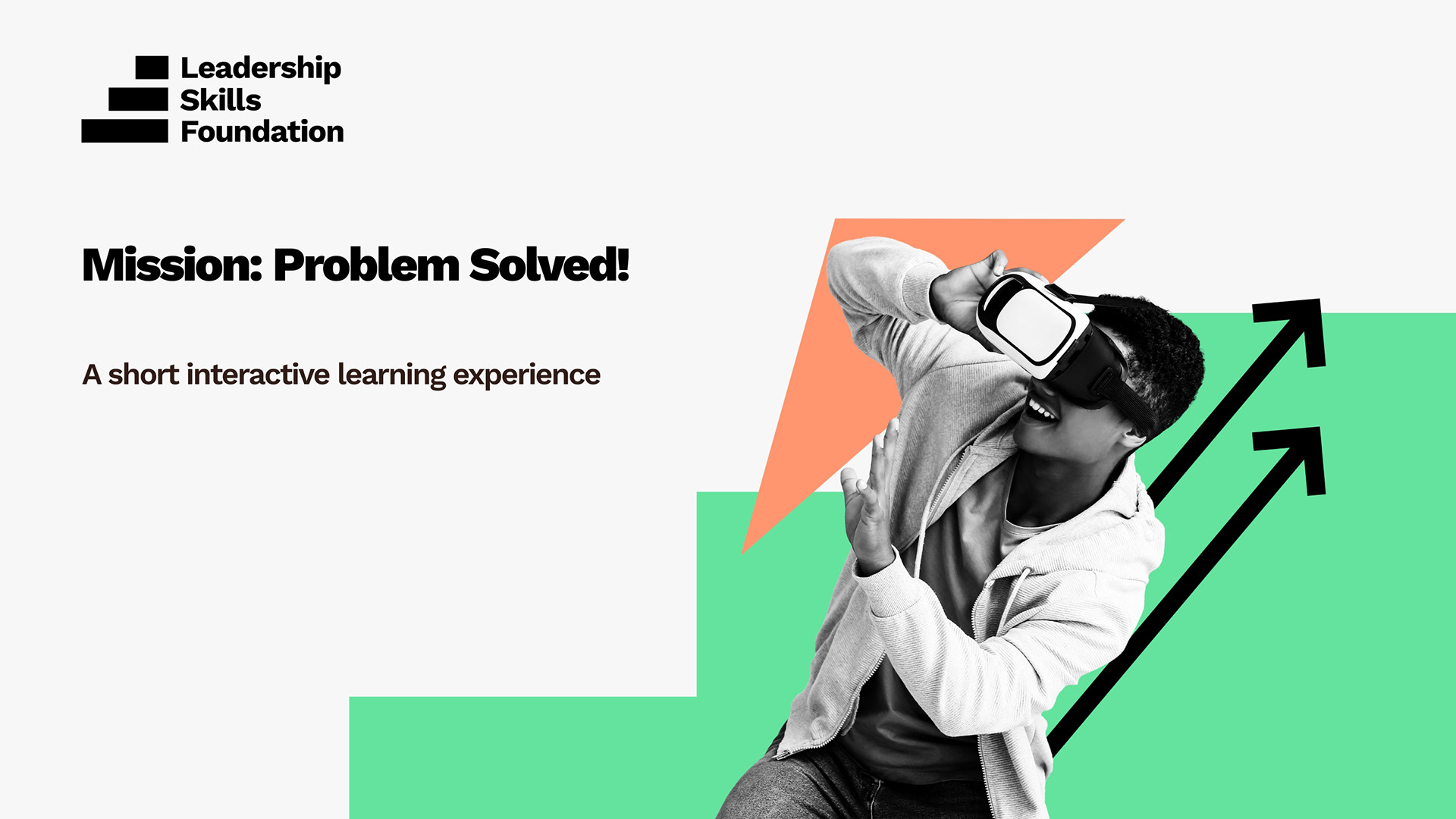
Mission: Problem Solved! is an interactive learning resource concept designed for 14-year-olds in youth groups and after-school settings.
Mission: Problem Solved! is an interactive learning resource concept designed for 14-year-olds in youth groups and after-school settings.
Created as part of an interview task, the project explored how leadership skills such as problem solving, teamwork, and communication could be developed through an engaging and collaborative learning experience.
The Challenge
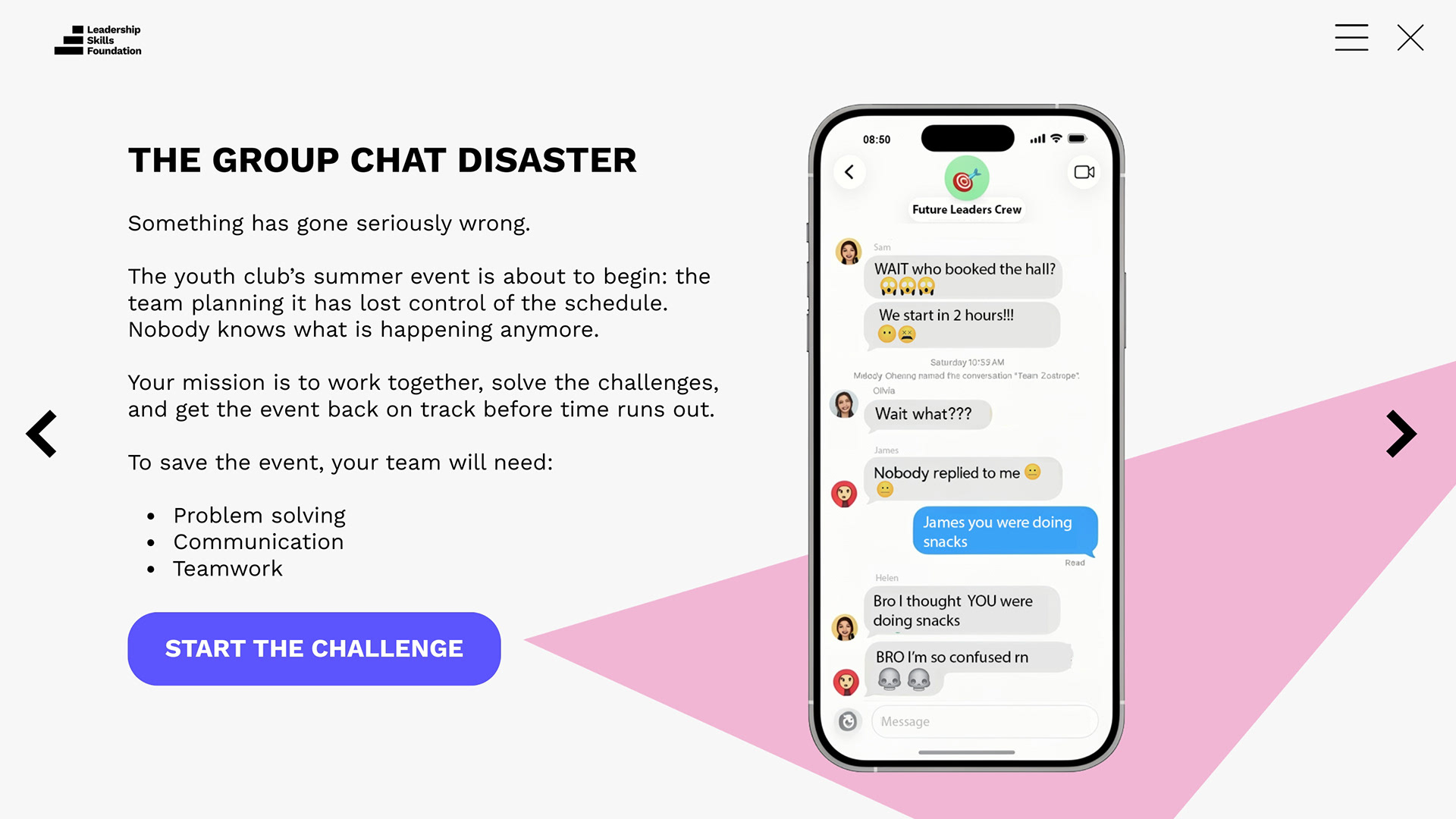
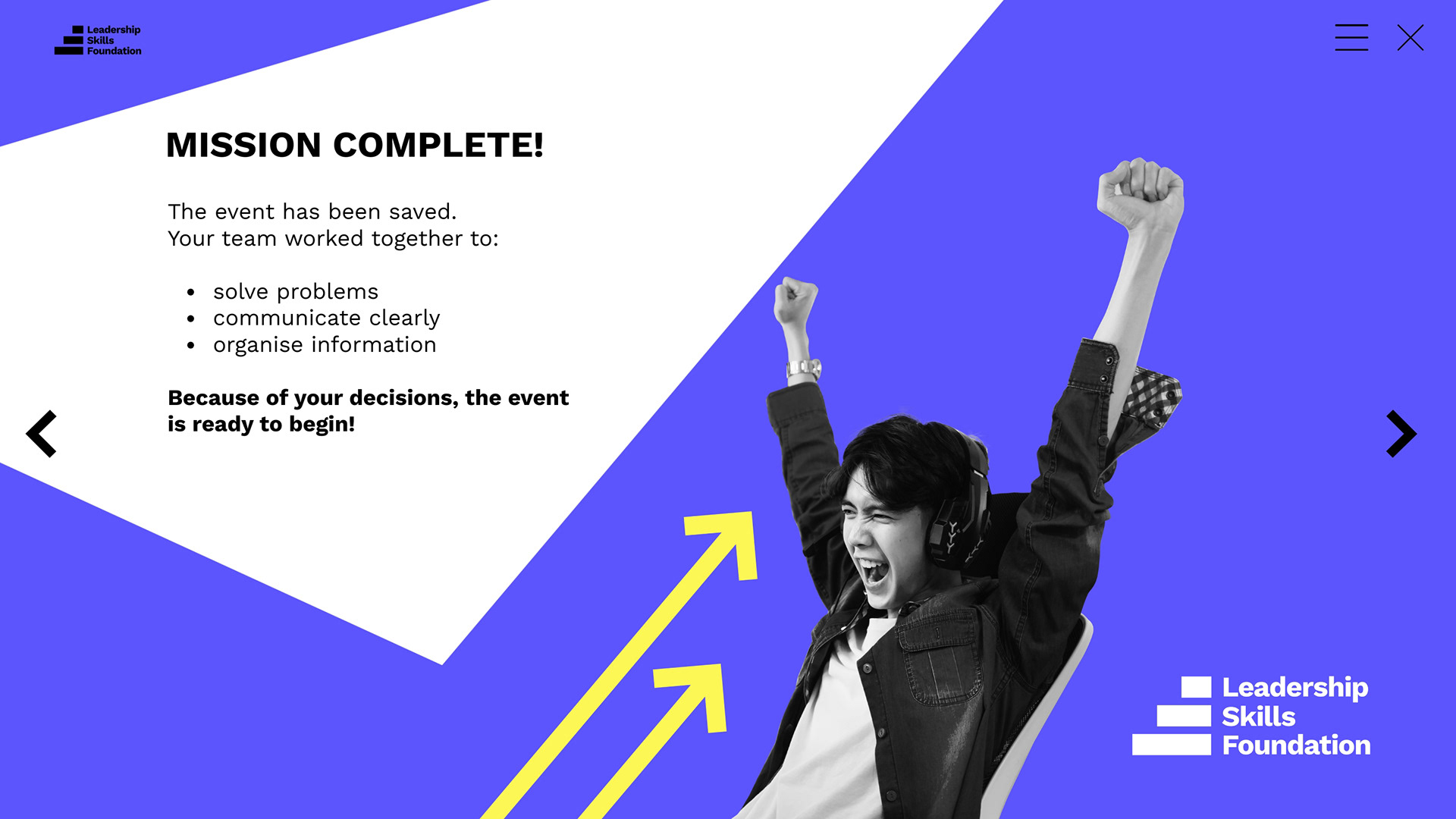
Inspired by the format of escape rooms, I developed a concept that follows a fictional youth club event where the planning has completely fallen apart. Learners work together to solve a series of timed challenges before the event begins.
Inspired by the format of escape rooms, I developed a concept that follows a fictional youth club event where the planning has completely fallen apart. Learners work together to solve a series of timed challenges before the event begins.
The goal was to create a flexible concept, something accessible and realistic for mixed-ability learners.
The structure was designed to encourage problem solving, communication, teamwork.
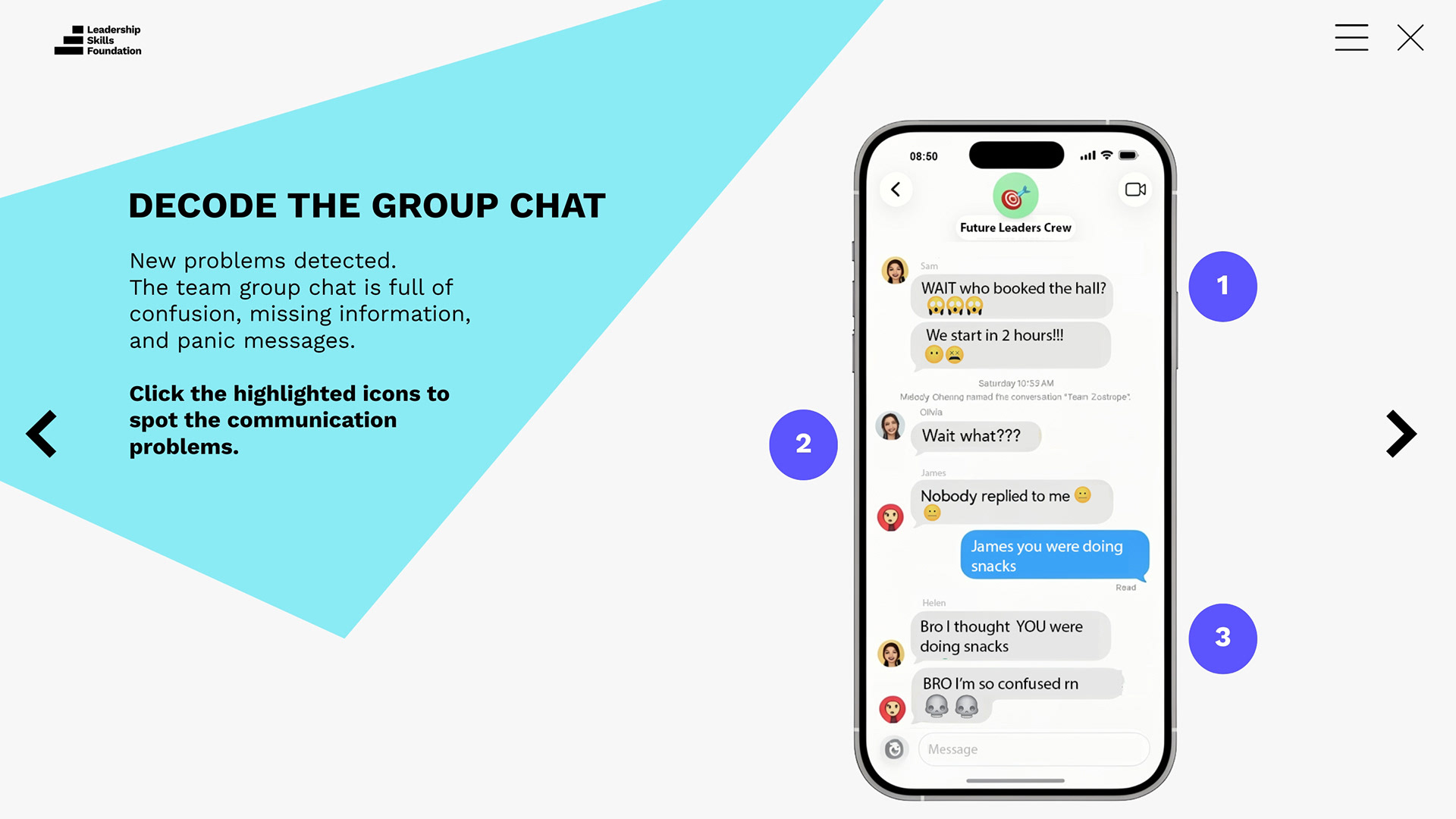
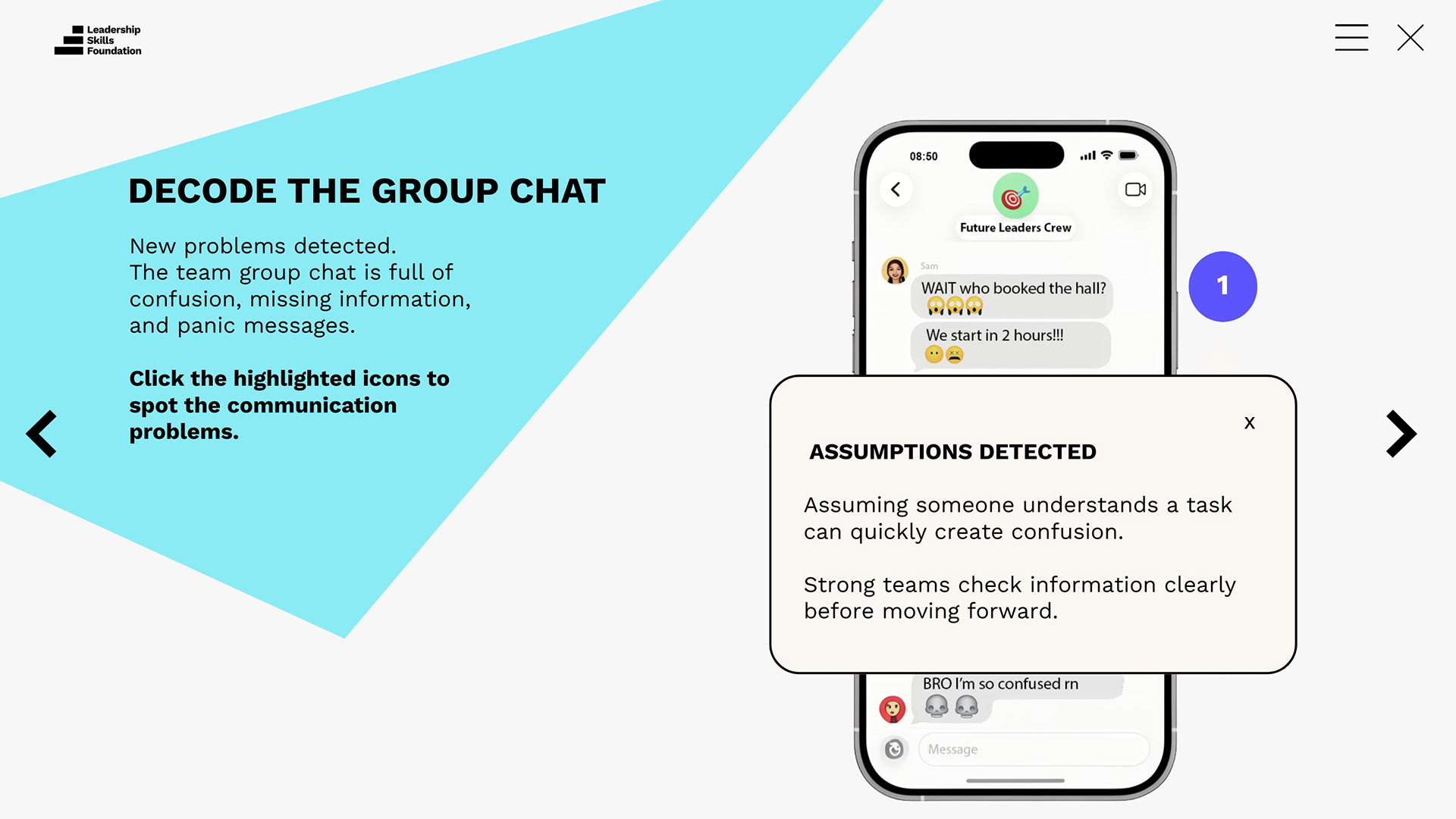
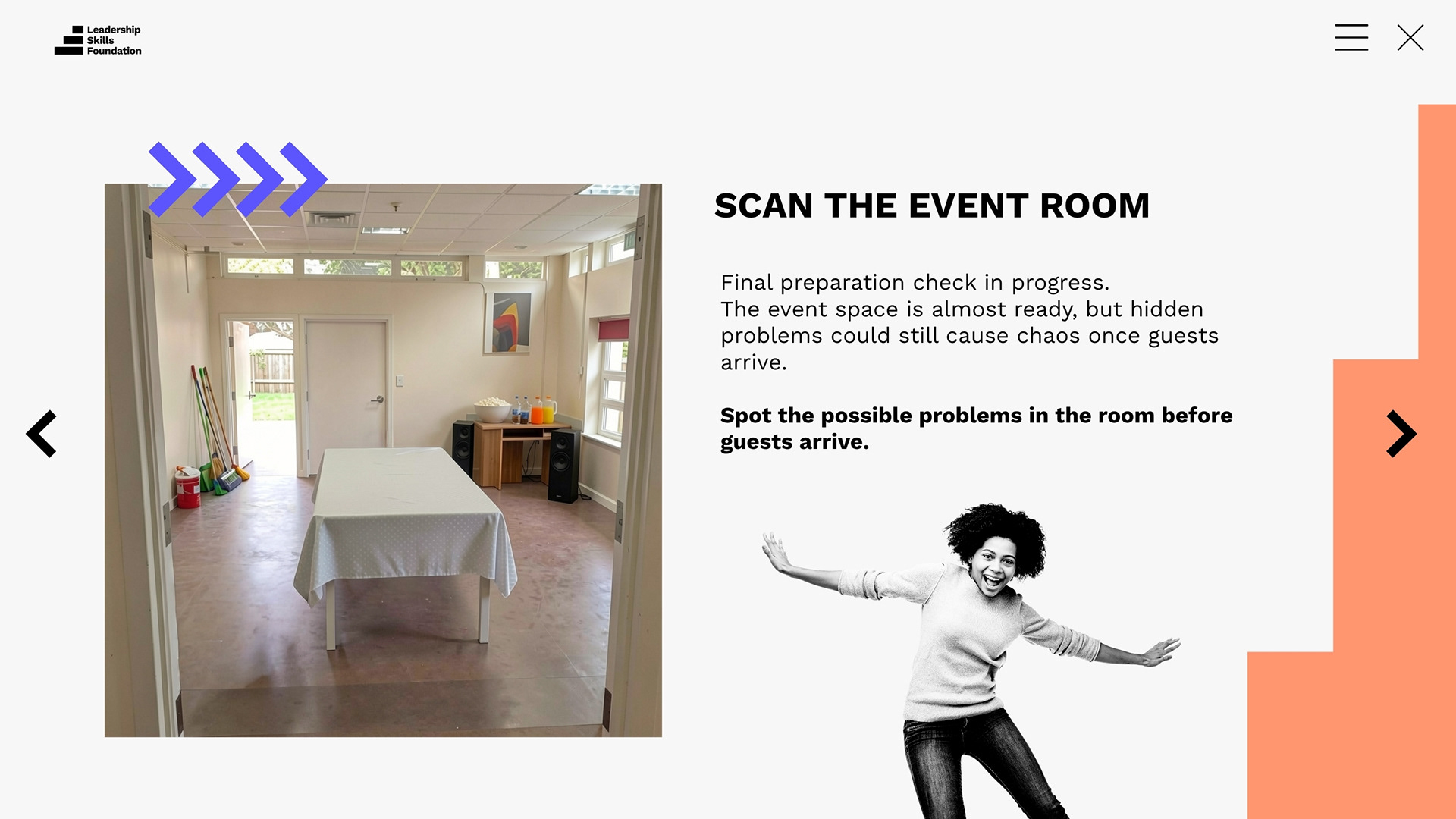
The scenarios were intentionally based on situations familiar to young people, such as chaotic group chats, missing information, unclear responsibilities, and working collaboratively under time pressure.
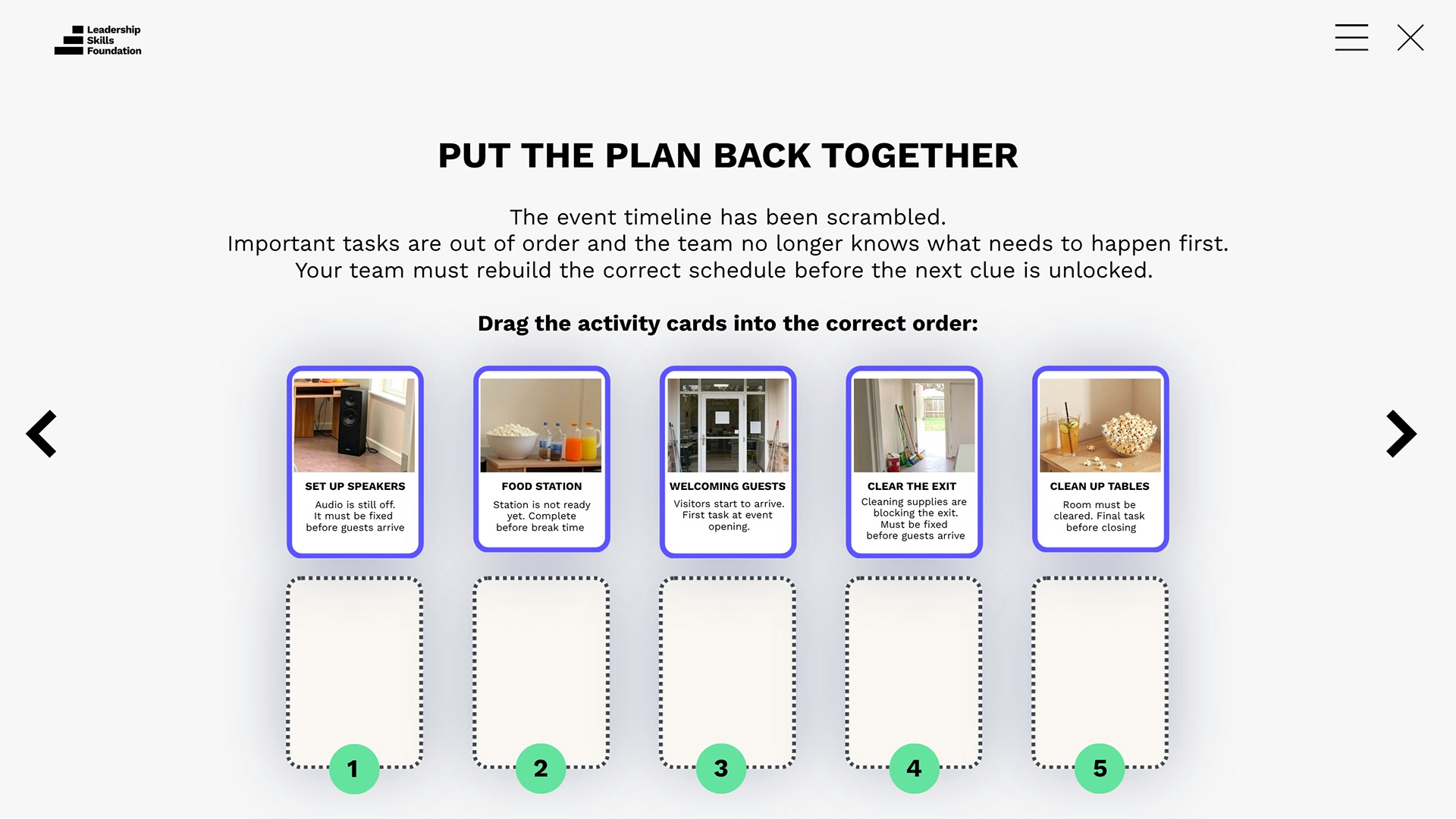
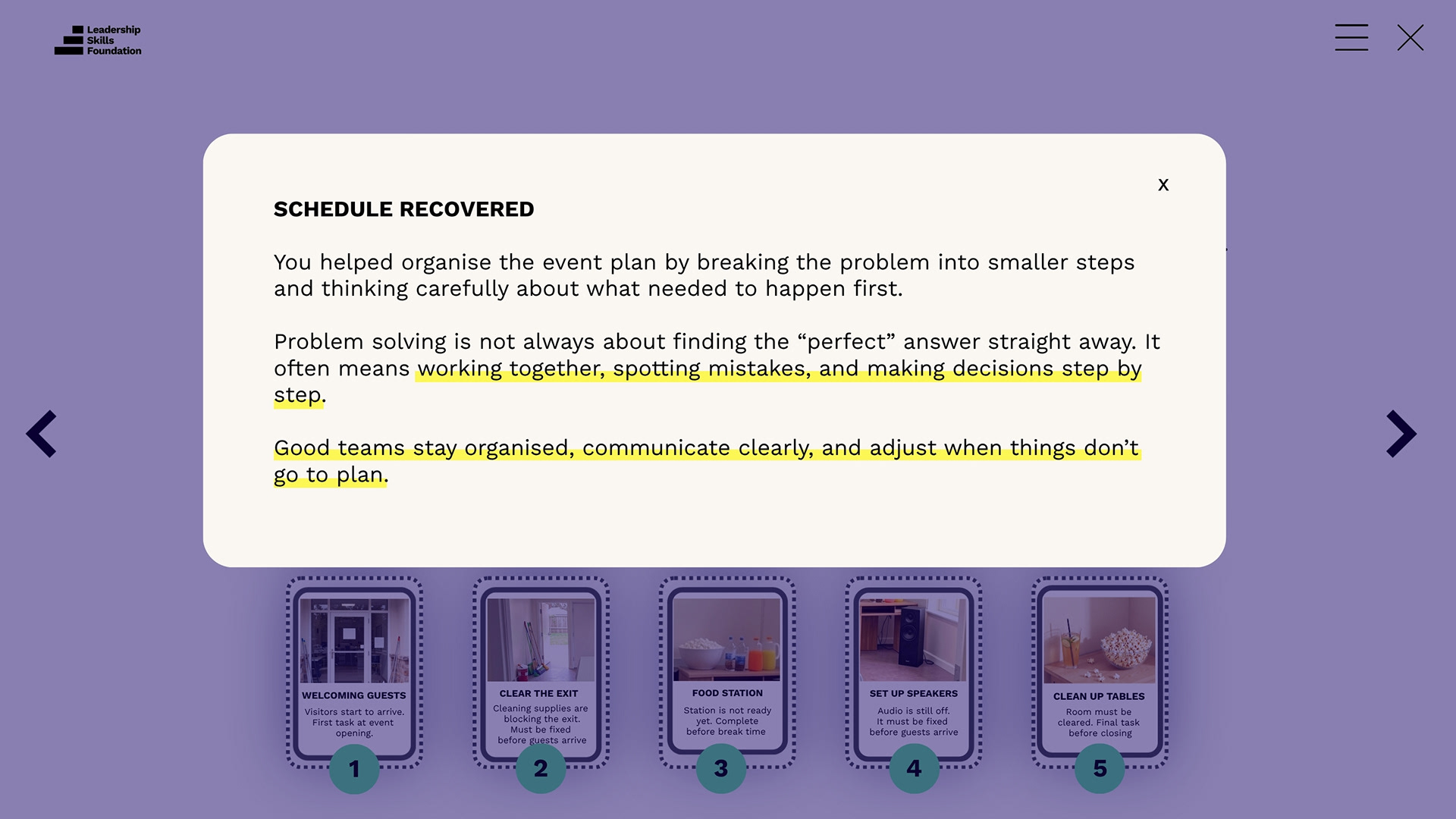
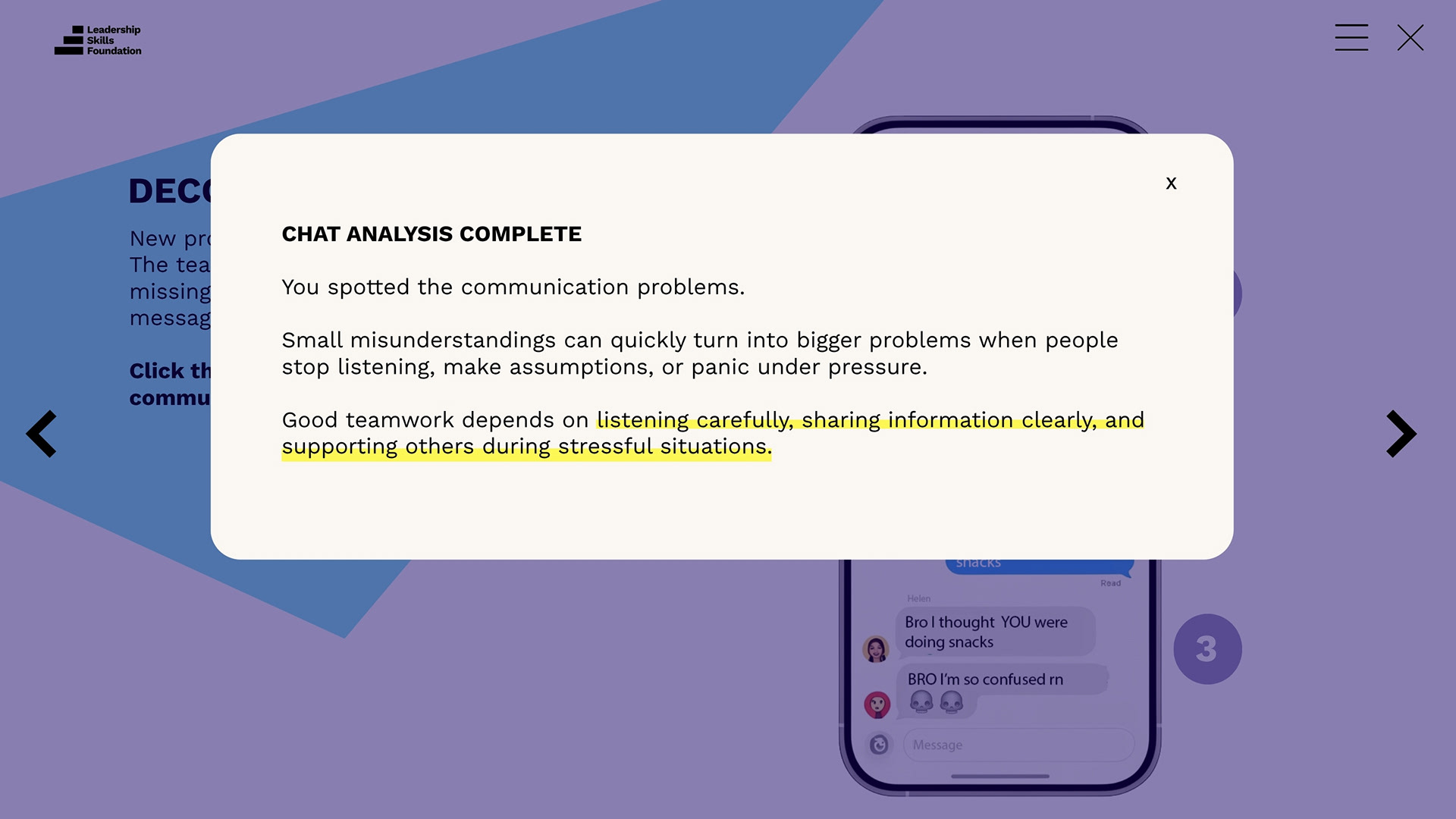
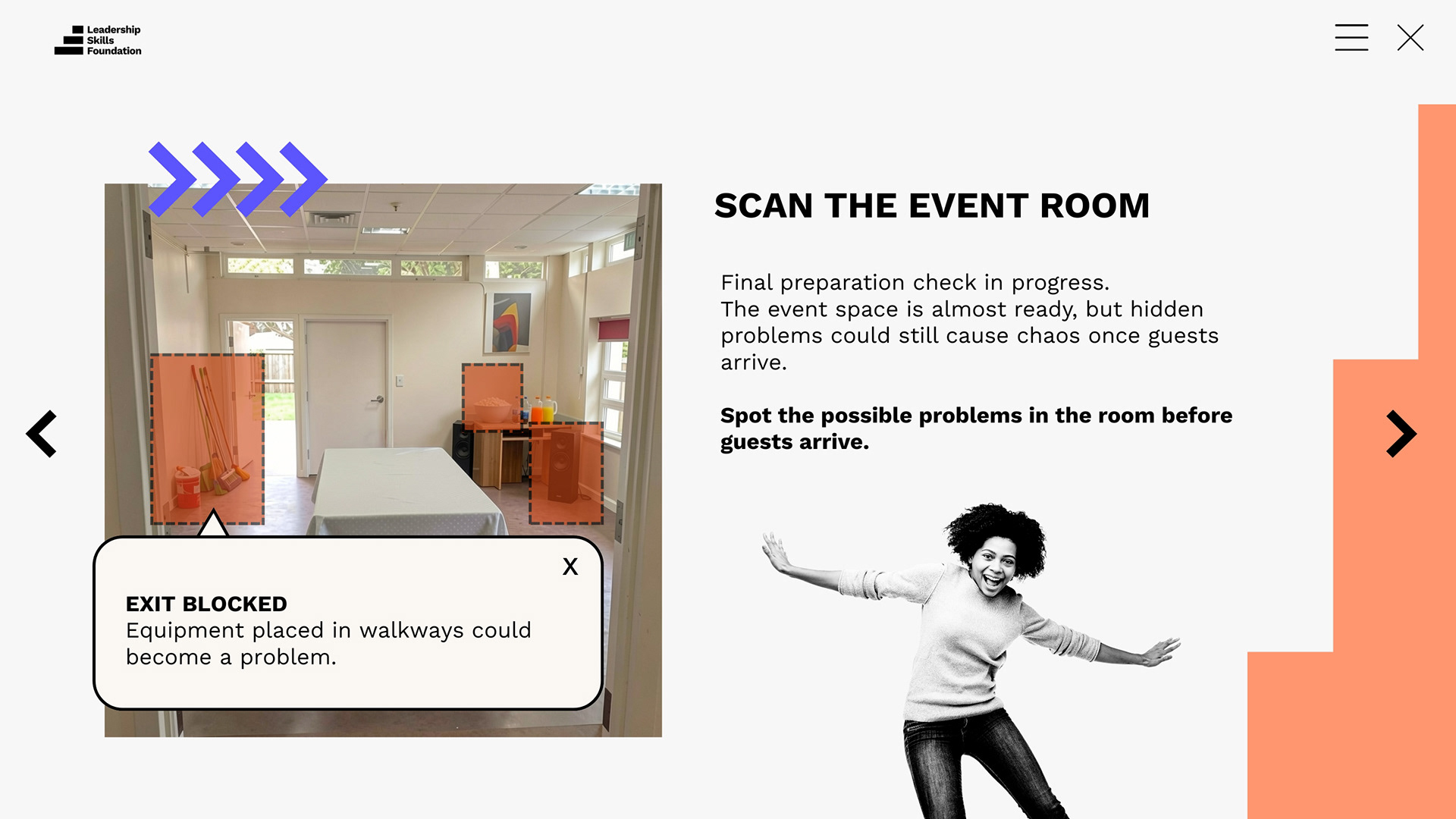
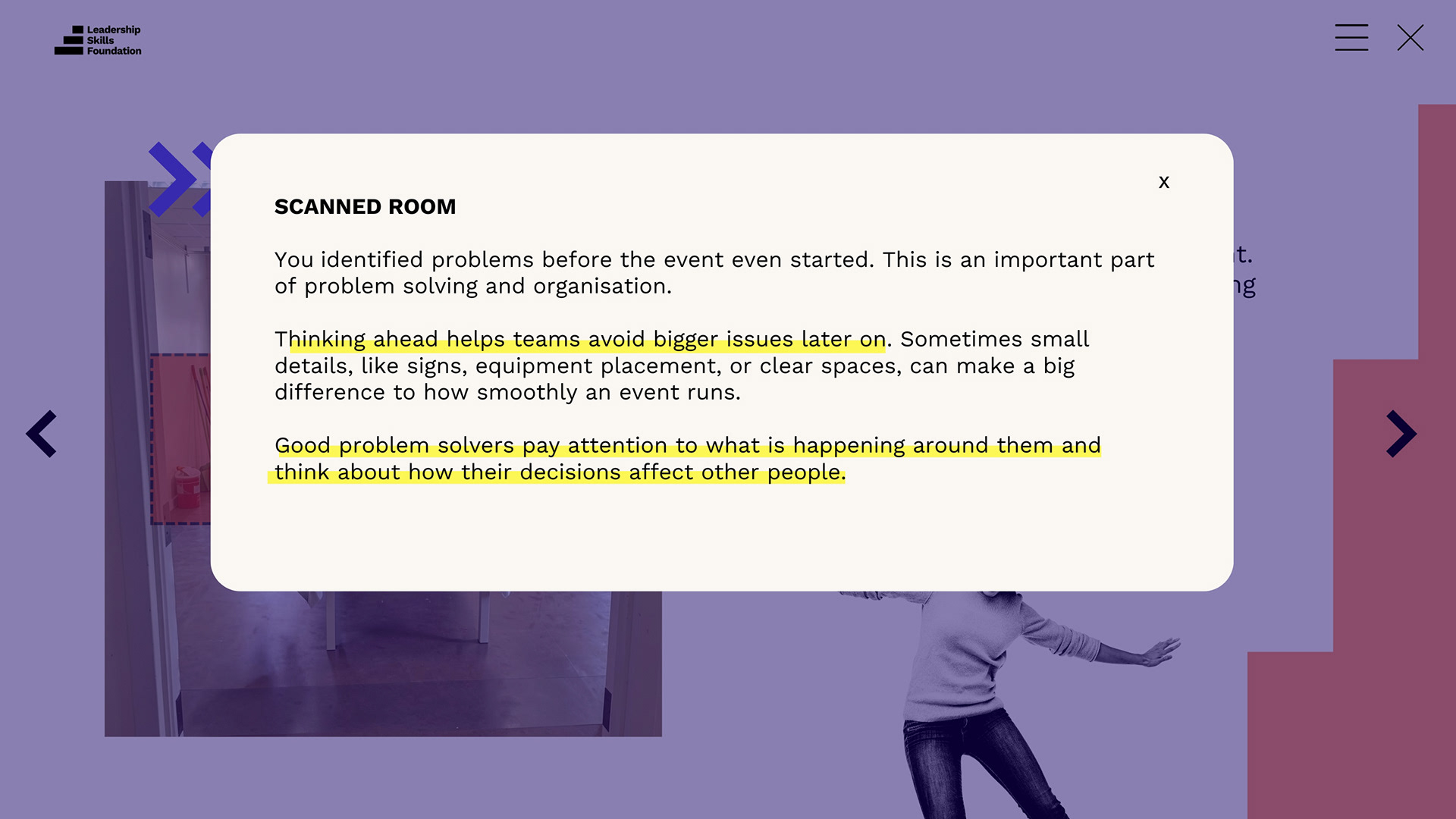
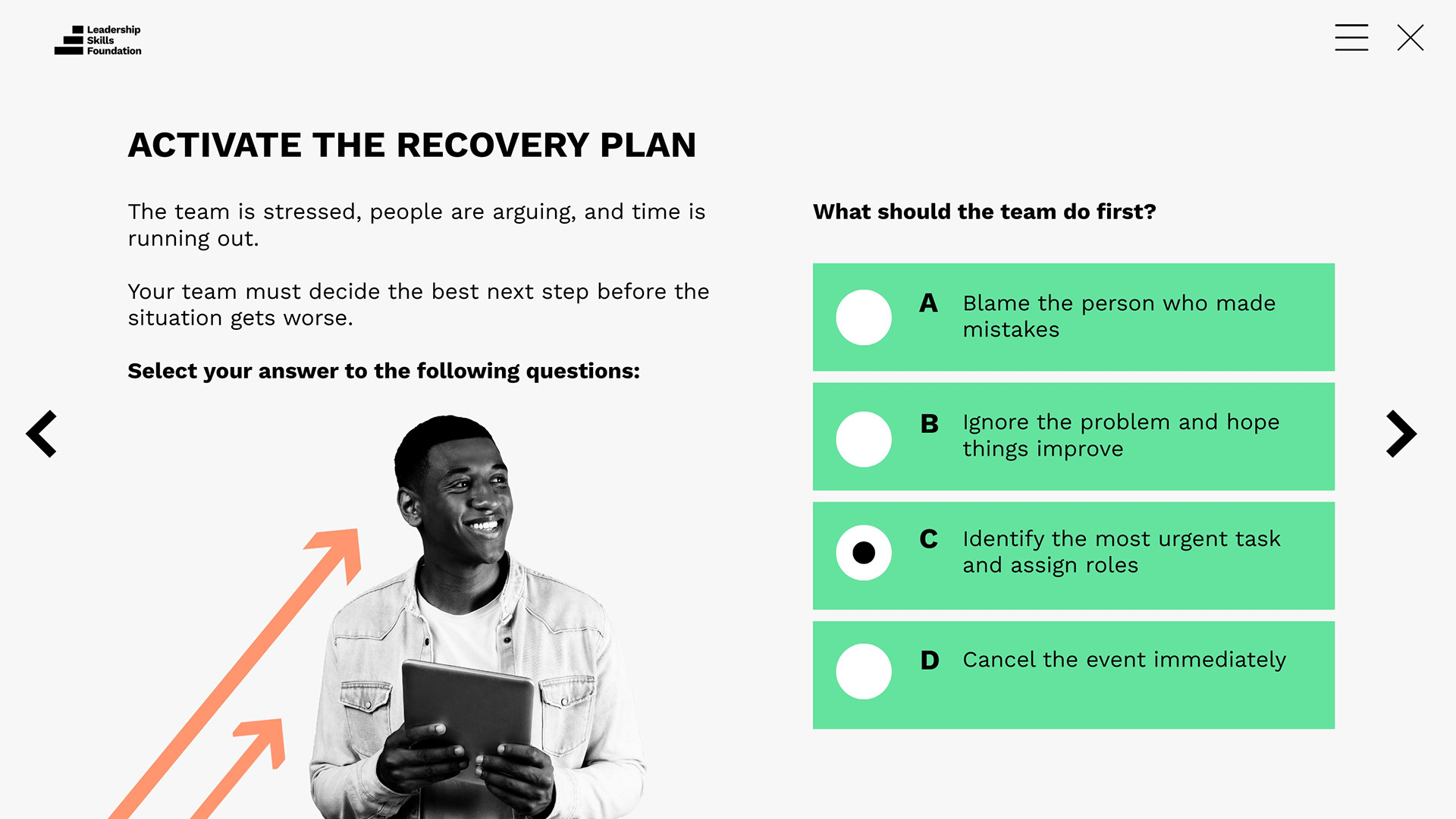
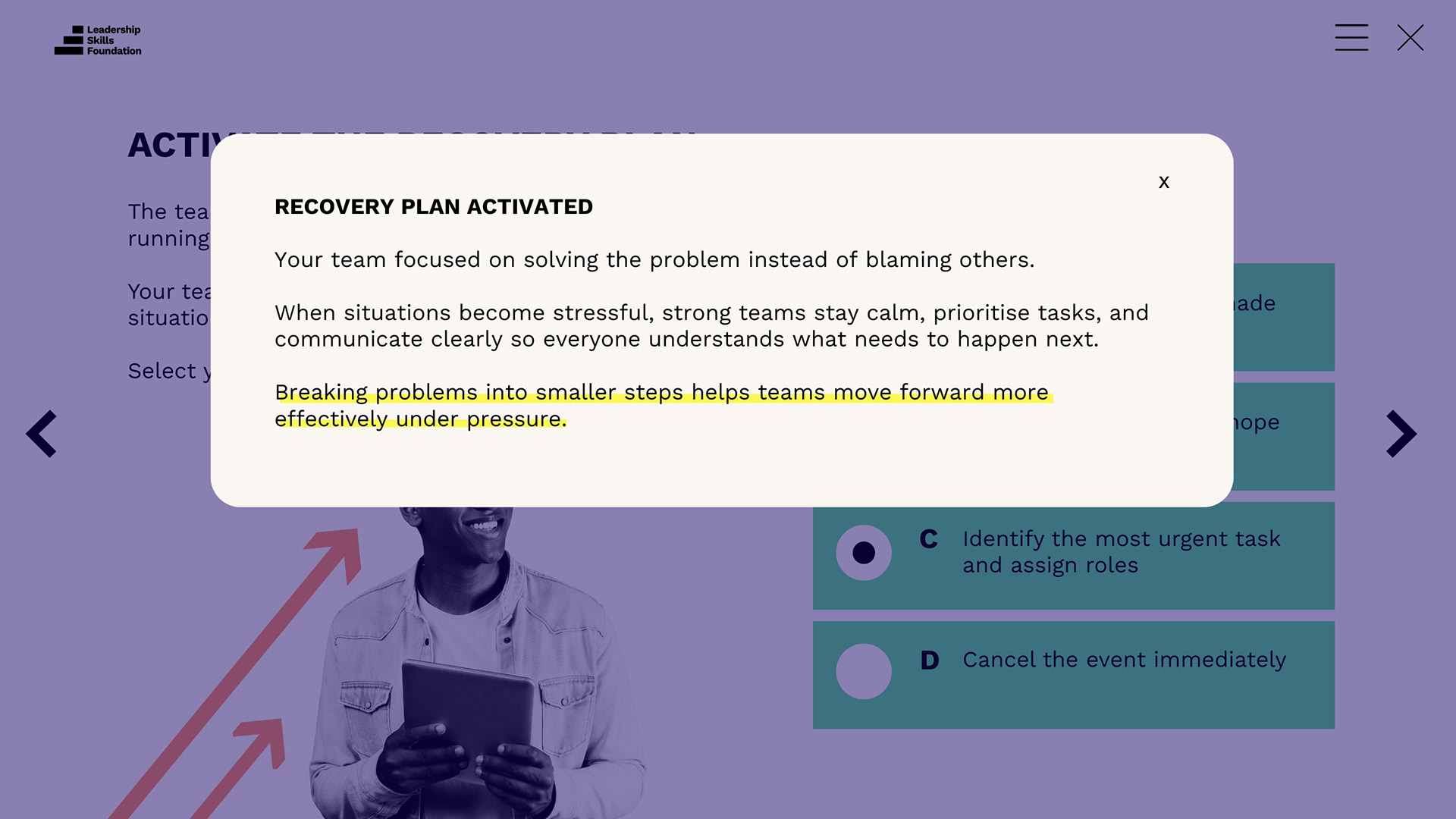
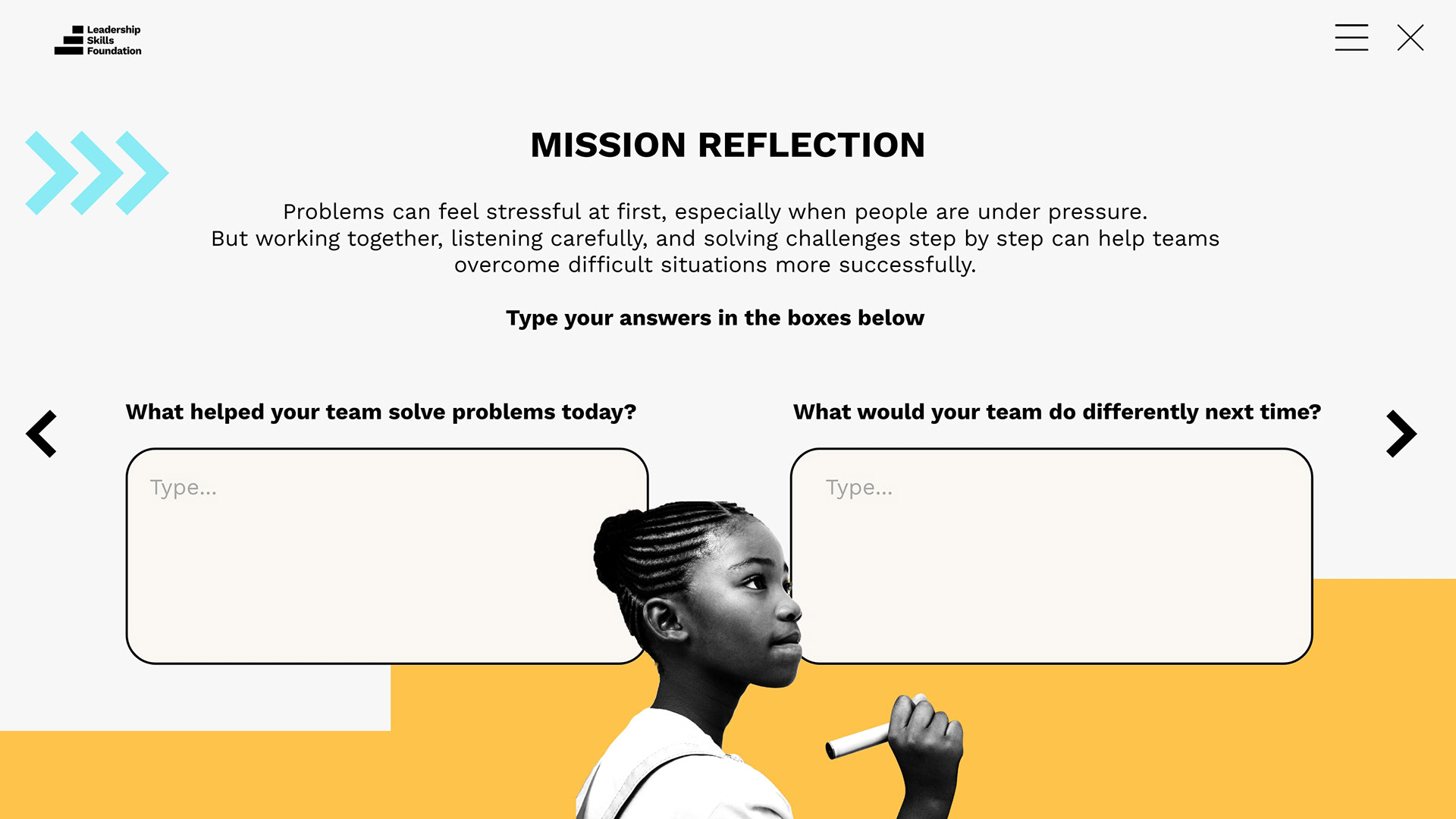
To keep learners engaged throughout the experience, the resource combined different interaction styles including: drag-and-drop sequencing, clickable hotspots, image-based challenges, multiple-choice decisions, reflective prompts.
My role
I developed the full concept independently, including:
• learning direction
• scenario development
• interaction ideas
• visual layouts
• UX thinking
• accessibility considerations
• written content
• presentation design
The project combined visual communication with learner-centred thinking to explore how digital and facilitated learning experiences could feel interactive and approachable for young audiences. The experience was also designed to support different participation styles, allowing learners to engage through discussion, visual tasks, observation, or collaborative decision-making depending on their confidence levels and strengths.
Visual approach and accessibility
The visual direction focused on keeping the experience clear, energetic, and easy to follow. The experience was also designed to support different confidence levels and participation styles. Key considerations included: short text sections, clear hierarchy, colour contrast, simple instructions.
Flexible delivery
Although presented as a digital concept, the resource was intentionally designed to work flexibly across:
• facilitated workshops;
• youth group activities;
• blended learning sessions;
• lightweight e-learning experiences.
The structure could also be adapted for different confidence levels, learning styles, and support needs through facilitator guidance, simplified instructions, smaller group work, adjusted pacing, or reduced visual complexity for neurodivergent learners and mixed-ability groups.